eIDAS-compliant digital identity, verifiable attestations, and trusted data ecosystem — enabling institutions and enterprises to deliver secure, scalable, citizen-centric services with built-in trust, automation, and cross-border interoperability.
Home
At Certit, we believe trust is the foundation of all meaningful digital interactions. Yet in today’s rapidly evolving world, trust is too often fragmented, slow to verify, and easy to manipulate.
Our vision is to change that—by building a global trust infrastructure that is secure, interoperable, and accessible to all.We aim to redefine how people and organizations establish credibility, share achievements, and verify identity. By leveraging the power of verifiable credentials, decentralized identifiers, and emerging technologies like AI and edge computing,
Certit empowers individuals with ownership over their digital identities and credentials.
Whether it's a student presenting a qualification, a professional proving a license, or a smart device authenticating access in real-time, Certit enables fast, fraud-resistant verification at scale.
Our goal is a world where trust flows freely, data stays private, and proof is always within reach—anywhere, at any time, by anyone.Certit is not just shaping the future of digital certification—we're laying the groundwork for a trusted digital society.
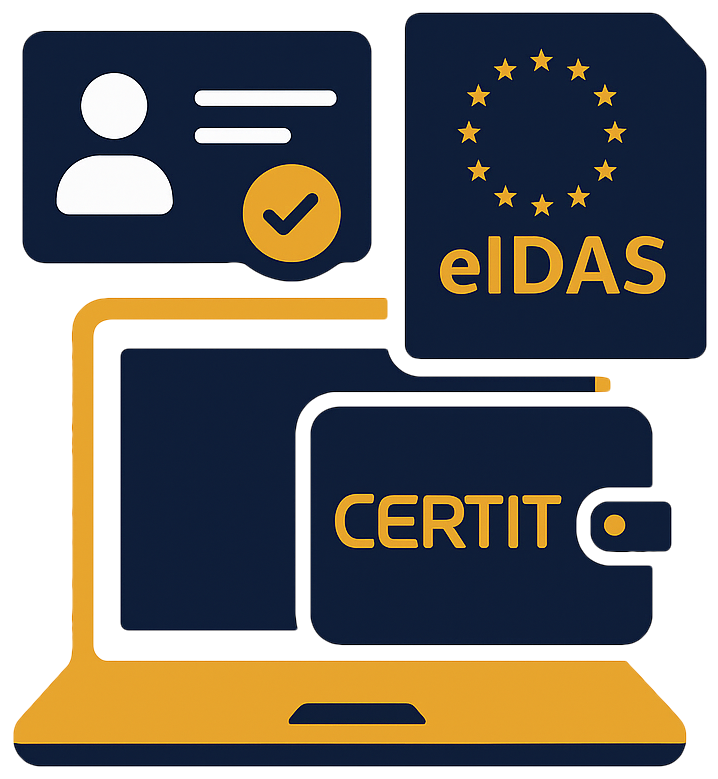
Certit’s digital wallets are designed to meet the highest standards of trust, privacy, and interoperability—fully aligned with the eIDAS 2.0 framework and the evolving requirements of European Digital Identity (EUDI) wallets.
Our wallets empower individuals and organizations to securely store, manage, and share verifiable credentials—including identity documents, licenses, and certifications—while maintaining full user control over data access and consent. Every credential is cryptographically signed and instantly verifiable, ensuring both legal validity and technical integrity.
Key features include:
eIDAS-compliant architecture for legal recognition across EU member states
Cross-border interoperability with public and private sector ecosystems
Selective disclosure & zero-knowledge proofs for privacy-preserving data sharing
Integration-ready APIs for seamless use across digital platforms, services, and devices
Certit’s digital wallets are more than credential containers—they’re a cornerstone of a secure, user-centric digital identity ecosystem.
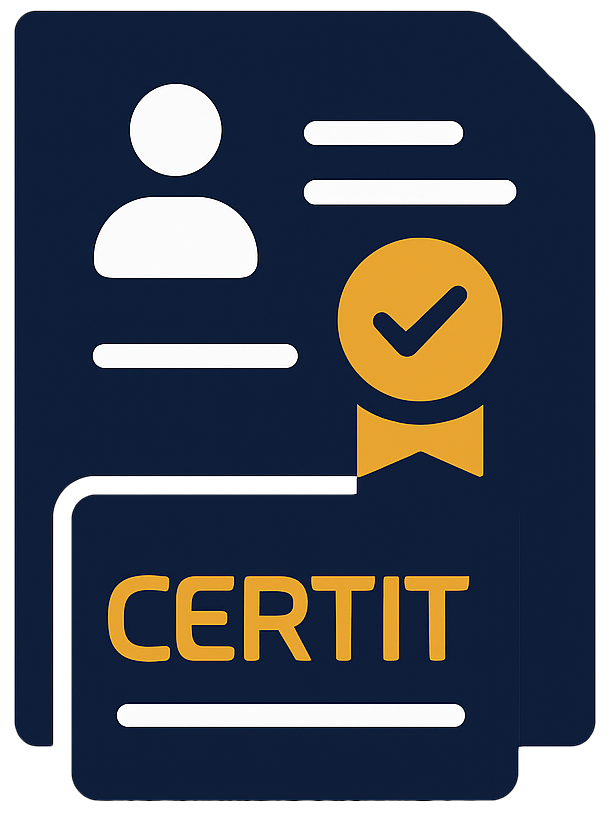
Certit issues digital certificates as W3C-compliant Verifiable Credentials (VCs)—digitally signed, tamper-proof, and instantly verifiable across platforms and borders.Unlike traditional documents, Certit credentials are dynamic and privacy-centric.
Through Verifiable Presentations (VPs), holders can share their credentials in a controlled and secure way—proving only what’s necessary to the verifier.Certit also enables Selective Disclosure, allowing users to reveal only specific fields from a certificate without exposing the full credential.
Whether verifying a qualification, compliance status, or identity attribute, users stay in control of their data—minimizing exposure while maximizing trust.
Examples include: Proving a license is valid without showing license numbers, Confirming age eligibility without disclosing full birthdate, Sharing a degree credential without listing unrelated coursework
Key Benefits
Tamper-proof & cryptographically verifiable
Privacy-preserving with user-controlled data sharing
Interoperable with EUDI and global trust frameworks
Supports revocation checks and real-time verification
Seamless integration with digital wallets and verifiers
With Certit, digital certificates become secure, intelligent credentials—ready to be presented with precision and trust in every context.
Certit provides secure, user-controlled Verifiable Identities (VIDs) that enable individuals and organizations to prove who they are—digitally, reliably, and across borders.
Compatible with EBSI Decentralized Identifiers (DIDs) and aligned with eIDAS 2.0 and EUDI wallet specifications, Certit identities are portable, privacy-preserving, and interoperable.
At the core is the concept of Person Identification Data (PID)—a structured, legally recognized identity payload defined by eIDAS to establish trust in cross-border transactions.
Certit ensures that identity attributes—such as name, date of birth, nationality, or unique identifiers—can be verified cryptographically, shared selectively, and bound to a digital wallet, without exposing more than necessary.
Key Features
PID-compliant identity structures for use in regulated EU digital services
Verifiable Presentations enabling purpose-specific, privacy-focused identity proofs
Support for biometric and electronic signatures for strong identity binding
Cross-sector interoperability with public and private trust frameworks
Integration with IoT and edge systems for real-time identity-based access control
Certit’s Verifiable Identities give individuals full control over their identity data—ensuring they can prove who they are, securely and compliantly, wherever trust is required.
At the heart of Certit's infrastructure is a resilient Trust Layer—a decentralized network of Trust Anchors that ensure every credential, identity, and verification is rooted in authenticity.
Trust Anchors are authoritative entities—such as government bodies, certification authorities, universities, or licensed issuers—whose credentials and signatures serve as the foundation for verification.
Each anchor is uniquely identified, cryptographically verifiable, and recognized within governance frameworks like eIDAS, EBSI, and EUDI.
Certit leverages these anchors to build verifiable trust chains, enabling recipients and relying parties to trace the origin and integrity of any credential or identity back to a known and trusted source.
What Trust Anchors Enable:
Issuer authenticity validation via public keys and/or decentralized identifiers (DIDs)
Revocation and status checks using tamper-proof registries or ledgers
Cross-domain interoperability within public and private trust ecosystems
Compliance alignment with digital trust standards (e.g., eIDAS, ISO/IEC 18013-5)
Anchor registries that can be consulted automatically during verifications
By embedding trust into every interaction, Certit’s Trust Layer ensures that verifiers don’t just check what is claimed—they can trust who made the claim, and under what governance.
Certit delivers secure, real-time verification processes that are designed for accuracy, privacy, and scalability.
Whether validating a credential, identity, or authorization, our system ensures every check is cryptographically sound and legally compliant.
At the core of Certit's verification model is the Verifiable Credential (VC) and Verifiable Presentation (VP) architecture, supported by decentralized identifiers (DIDs) and anchored by trusted issuers.
How Verification Works:
1-Credential is presented by the holder as a Verifiable Presentation
2- Metadata and signatures are checked against issuer records and trust anchors
3-Revocation registries (or Status attestation certification) are consulted to ensure the credential is still valid
4- Selective disclosure ensures only necessary information is revealed
5- Decision is automated or human-reviewed, depending on policy or risk level
Supported Verification Features:
Instant, machine-verifiable proofs—no manual follow-up needed
Decentralized resolution of issuer authenticity via DIDs and Trust Anchors
Standards-based protocols including W3C VC/VP, JSON-LD, DIDComm, and OpenID4VC
Revocation-aware using status sttestation or blockchain-based revocation registries
Compliant with eIDAS and EUDI wallet verification workflows
Whether verifying professional credentials, age, identity, or access rights, Certit’s verification engine turns complex trust decisions into fast, secure, and transparent outcomes—across devices, borders, and ecosystems.
Certit extends digital trust into the physical and intelligent world through seamless integration with AI, IoT, and edge computing technologies.
This convergence enables real-time, context-aware verification and automation across digital and physical environments.
Artificial Intelligence (AI)
AI enhances Certit’s verification processes by enabling:
Automated document and identity verification
Anomaly and fraud detection using behavioral models
Policy-based decision-making for access control and compliance
Credential classification and validation workflows at scale
Internet of Things (IoT)
Certit credentials can be issued to or verified by connected devices, enabling trusted interactions between machines and people.
Use cases include:
Smart access control (e.g., doors, terminals, vehicles)
Equipment usage tracking by certified personnel
Environmental monitoring devices issuing compliance reports as verifiable data
Edge Devices & Computing
By deploying verification logic to edge devices, Certit enables:
Offline verification in remote or low-bandwidth environments
Faster decision-making without needing to contact a central server
Data privacy and sovereignty, keeping sensitive information local
Together, these integrations position Certit as a foundational layer for a trusted, intelligent, and automated world—where devices and humans can exchange verified information securely and efficiently, wherever they are.
CertIT’s digital trust infrastructure powers real-world applications across key domains where identitfication of actors, integrity of the process and interoperability are critical. From product traceability to digital health and credentialing, our solutions enable secure, verifiable, and scalable services aligned with EU regulations.
Education & Certification
Lorem ipsum dolor sit amet, consectetur adipiscing elit. Suspendisse tincidunt sagittis eros.
CircularEconomy & Lifecycle Tracking
Supporting sustainability goals with verifiable lifecycle data and traceability from production to reuse..
Healthcare& Digital Health Wallets
Enabling secure, citizen-centric healthcare services through trusted digital identity and consent-based data exchange..
Agrifood & Product Certification
Enhancing transparency and trust in food supply chains with verifiable product passports and anti-fraud measures.
CertIT’s platform is built on a foundation of advanced technologies and open standards that enable secure, scalable, and interoperable digital trust services. These capabilities ensure compliance, user sovereignty, and seamless integration across sectors and use cases.